Medical cannabis offers relief from symptoms like chronic pain, nausea, and muscle spasms, benefiting conditions such as multiple sclerosis, arthritis, and cancer. It also shows promise in managing anxiety, depression, and PTSD.
Furthermore, some studies suggest that cannabinoids found in cannabis may have neuroprotective properties, potentially benefiting patients with neurological disorders like epilepsy or Parkinson’s disease. Overall, the therapeutic potential of medical cannabis continues to be explored, offering hope for improved quality of life for many patients.
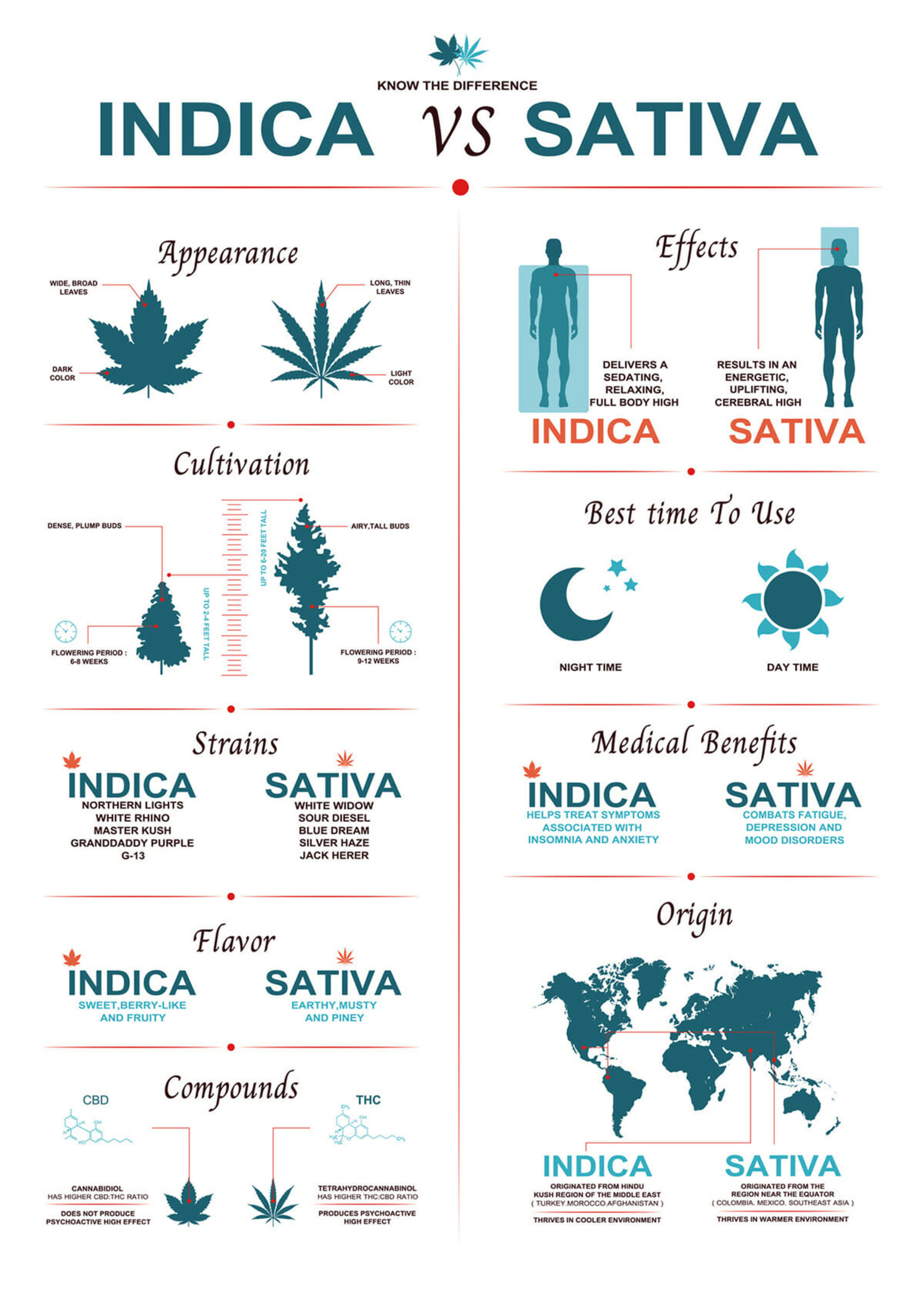
Cannabis strains:
Indica
Its effects are usually described as potentially calming, relaxing or sleep-inducing.
Sativa
Its effects are usually described as potentially energizing, uplifting or mentally stimulating.
Hybrid
Its effects are usually described as potentially being a mix of Indica and Sativa effects.
UNDERSTANDING
THE PRIMARY CANNABINOIDS
THC
Tetrahydrocannabinol (THC) is the main psychoactive compound in cannabis. It causes most of the psychotropic and physical effects sought by users, including a feeling of euphoria. Experiencing these effects is often referred to as being stoned, high or buzzed. The higher the percentage of THC, the more strongly the effects will be felt.
CBD
Usually found in lower concentrations than THC, cannabidiol (CBD) has few if any euphoric effects. In higher doses, it may have medicinal uses and may favour mental and physical relaxation and better sleep. It may also moderate some of THC’s unpleasant psychotropic effects (paranoia, anxiety, etc.). Note, however, that none of these claims has been proven. CBD is currently the subject of several studies aimed at better identifying its potential properties.
CBG
Generally, cannabigerol (CBG) is only present in very small quantities and has no psychoactive properties, but certain preliminary studies seem to attribute the following properties to it, which are not scientifically proven: It can potentially act as an antibacterial agent against staphylococcus aureus bacteria, associated with various infections; It can block receptors that support the growth of cancerous cells; It interacts specifically with certain receptors in the human body, prompting research on its potential to treat various neurological and inflammatory issues such as depression, inflammation, ocular problems like glaucoma, and gastrointestinal disorders.
CBN
Cannabinol (CBN) is not synthesized in the cannabis plant. It’s more of a derivative of THC that forms when THC degrades due to heat, air, and/or sun exposure. CBN has very little psychoactive properties. Although studies are in their preliminary stages, researchers are currently exploring CBN for Its potential to help regulate sleep and increase relaxation; Its immunosuppressive potential; its potential to reduce the impact of seizures, anxiety, inflammation, and arthritis.
×
Our Ongoing Commitment to You
The Government of Canada announced changes to their budget in 2025 that it will reduce spending on medical cannabis for Veterans beginning April 1, 2026. A reduction of this
scale may impact the availability of products and services provided in this program.
We understand this news may create uncertainty, and we want every Veteran to hear this directly from us: Abba Medix's dedication to Veterans remains unchanged. Your
care and your well‑being remain at the heart of everything we do.
Our ongoing commitments include:
Helping veterans access 100% coverage on all products with no out-of-pocket expenses
Providing personalized support through our best-in-class Customer Care Team
Curating the best selection of the highest quality medical cannabis products available in Canada
At Abba Medix, we will continue to advocate on behalf of veterans to provide the best possible medical cannabis program.
Supporting the veteran community is a responsibility we take seriously, and we are proud to continue standing behind those who have served.
Notre engagement constant à votre égard
Le gouvernement du Canada a annoncé, dans son budget de 2025, des modifications qui entraîneront une réduction des dépenses consacrées au cannabis médical pour les anciens combattants à
compter du 1er avril 2026. Une réduction de cette ampleur pourrait avoir des répercussions sur la disponibilité des produits et des services offerts dans le cadre de ce
programme.
Nous comprenons que cette nouvelle puisse susciter de l'incertitude, et nous tenons à ce que chaque ancien combattant l'entende directement de notre part : l'engagement d'Abba
Medix envers les anciens combattants reste inchangé. Vos soins et votre bien-être restent au cœur de tout ce que nous faisons.
Nos engagements actuels comprennent :
Aider les anciens combattants à bénéficier d'une couverture à 100 % sur tous les produits, sans frais à leur charge
Fournir un soutien personnalisé grâce à notre équipe de soins aux anciens combattants, la meilleure de sa catégorie
Sélectionner la meilleure gamme de produits de cannabis médical de la plus haute qualité disponible au Canada
Chez Abba Medix, nous continuerons à défendre les intérêts des anciens combattants afin de leur offrir le meilleur programme de cannabis médical possible.
Soutenir la communauté des anciens combattants est une responsabilité que nous prenons très au sérieux, et nous sommes fiers de continuer à soutenir ceux qui ont servi leur pays.